Showing posts with label Canada. Show all posts

Thursday, 4 April 2013

A winter with Vancouver Adaptive Snow Sports

This winter I volunteered as a ski instructor for Vancouver Adaptive Snow Sports (VASS). Last December, I attended the 3-day training session on Grouse Mountain where we got familiarized with the teaching methodology as well as the use of different adaptive equipment depending on the needs and abilities of students. The sessions covered teaching visually impaired skiers, 3-track and 4-track skiers as well as sit skiers.
VASS yurt
A 4-tracker would be a student with little strength in the lower body (e.g. cerebral palsy) who uses outriggers, a sort of crutches with little skies at the bottom, hence the name 4-track. Unlike in regular skiing the turn is initiated by upper body rotation (head, shoulder and arms) and the legs just follow like the trailer of a truck.

A 3-tracker would be an amputee who uses outriggers to balance, however, the technic is pretty much the same as for a regular skier.

A visually impaired student would have little to no eye sight and teaching a visually impaired student is very hands on as we can't show them what to do. During our training session, we practiced skiing with our eyes closed and relying on a fellow instructor to give us directions. It was very awkward as one has to rely entirely on another person and the sense of moving and balance is very different.

Sit skiing is for people who have little or no mobility in their lower body. Depending on the student, a mono-ski or bi-ski can be used. The bi-ski has two skis, is lower and is easier to learn.
At the end of the training session, all of us received the Canadian Association for Disabled Skiing (CADS) level 1 instructor certification.

Adaptive equipment
My regular VASS night was on Tuesday night at Cypress with a group of experienced disabled skiers and I got assigned a regular student with a fellow instructor. My student was a young adult with cognitive and developmental issues who talked non-stop throughout the lesson. It was difficult to keep his attention to skiing especially after we met up with the rest of the group half way through the evening. Towards the end of the season he did make some progress and we had some good laughs with him.

I also did a few drop in lessons on the weekends. One student was a 6-year old autistic boy who gave me a big hug right after I met him and his mother. His mother was surprised as he usually doesn't to that. Another student was a 9-year old boy with Down Syndrome and to keep him motivated throughout the lesson we were playing Zombies.
I also got the opportunity to teach a blind Japanese student who at the end of the 2-hour lesson was able to link turns on the bunny slope. That was so inspiring!
Another student I was assisting with is a 12-year old girl a.k.a speed demon, she had to be kept on tethers as her idea of skiing is going straight down the mountain as fast as possible without turning. We were playing catch me if you can by making wide turns across the hill.
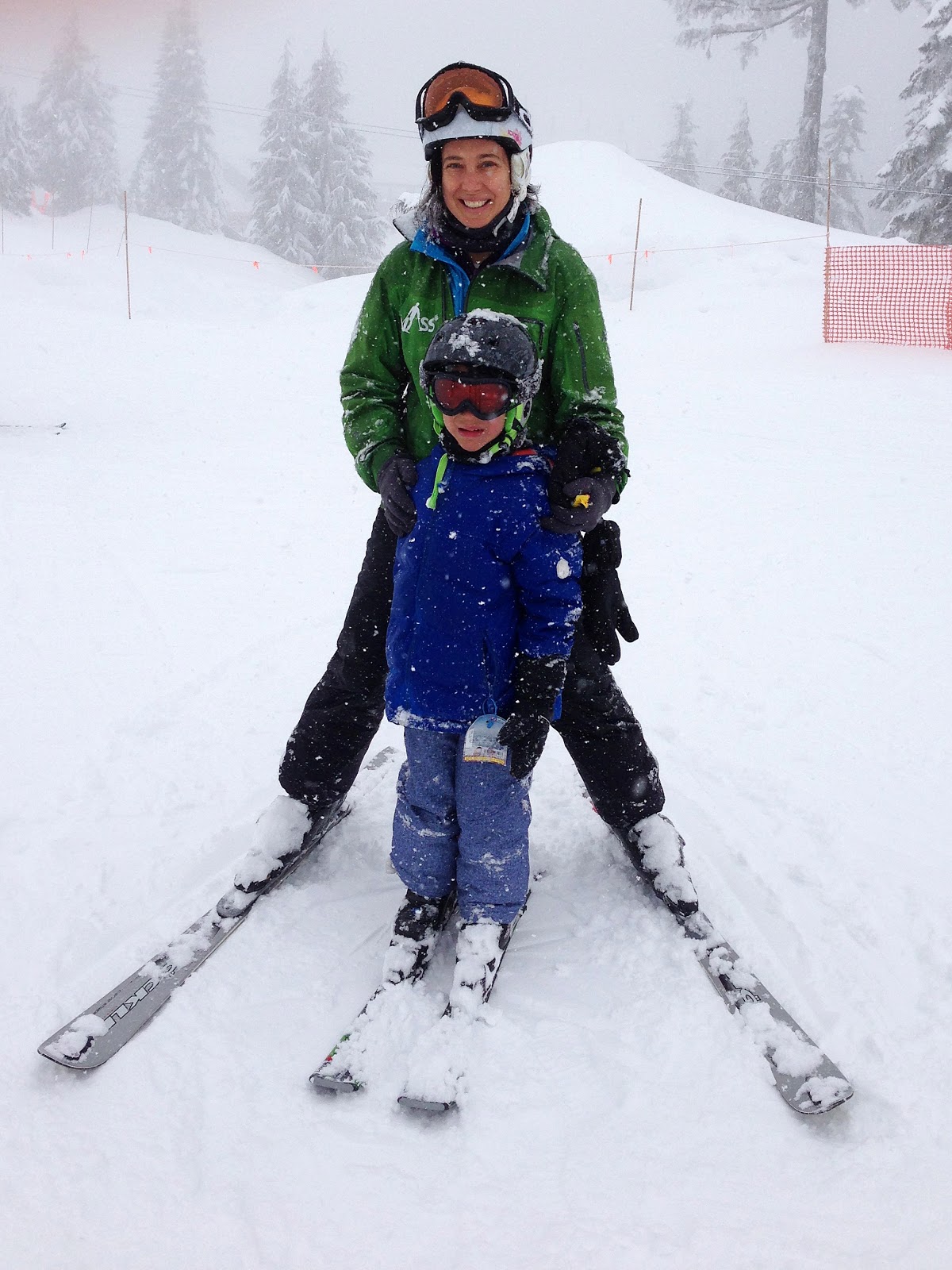

In addition to teaching skiing I have made some wonderful friends through VASS including my two ski buddies Angie, a 4-track skier and Anya, a sit-skier. We would go skiing together outside of the VASS program and have lots of fun. These two women are so inspiring as they enjoy life to it's fullest and don't let their disability get in their way.
Skiing Mount Baker
VASS also offered ski lessons for instructors and I signed up to take my CADS level 2 exam at the end of this winter season. Part of the exam was to demonstrate 3-tracking and 4-tracking which is not as easy as it sounds as it requires a lot of upper body strength. While I was in Sun Peaks at the end of March, I managed to take part in the CADS level 2 exam there and passed it. I also got my Canadian Ski Instructor Association level 1 certification earlier in March so I am all set for next year's ski season.

The experience with VASS has been very inspiring and rewarding, there are really no words to describe it.


Sunday, 17 February 2013

Sunset along the Sea to Sky Highway

Driving back from Whistler to Vancouver one afternoon in January, I witnessed this wonderful sunset along the Sea to Sky Highway. Unfortunately, I was unable to capture the surreal pink and purple sky reflecting in the water over Horseshoe Bay as there are not many places to stop along the highway. These images were captured in Porteau Cove and Lions Bay.


Tuesday, 12 February 2013

A snowboarder and a skier in Whistler

In January my friend Jen visited me for a few days. The highlight of her visit was the 4 fabulous days we spent riding and skiing at Whistler.


While there was no fresh powder we got our fair share of good snow, blue skies and sunshine. Due to an inversion, the temperatures were warmer on the mountain than in the valley and the views from the top of Whistler mountain were just stunning while the valley lay under a blanket of fog.


We explored a variety of terrain from nicely groomed blue runs to the more challenging black runs off of Whistler Peak and Blackcomb Mountain. After a half hour hike up to Flute Bowl we were rewarded with more stunning views of the surrounding mountains although the bowl itself turned out to be rather disappointing without any fresh powder.


Flute Bowl also serves as backcountry access into Garibaldi Provincial Park for those who want to escape the crowds at Whistler and enjoy the solitude of the mountains.


On Blackcomb Mountain we joined a free mountain tour that took us down the Blackcomb Glacier. The guides were a lot of fun and gave us good tips about different runs and how to access them.


Eventually, we dared to hike up Spanky's ladder to access the bowls off of Blackcomb glacier. While the hike was really short, it was bloody steep and nerve-wracking, one wrong step would send you gliding downhill. However, Ruby Bowl was worth every effort. The glade runs on Blackcomb were also a lot of fun.

The treat on our last days was the 5.5km Peak-to-Creek run, which is the longest intermediate run in North America. It was freshly groomed and flying down the mountain on perfect corduroy was awesome!
While we explored the two mountains on skis and snowboard we also explored the culinary delights on the mountain. Whistler offers excellent food from Japanese Udon Noodle Bowls to BBQ's to fully loaded Belgian Waffles.


The culinary exploration didn't stop on the mountain, Whistler Village is home to many good restaurants offering a variety of different cuisines. Jen had to try the local oysters, the restaurant at our hotel had a happy-hour special of a dozen oysters for $10.

Whistler, we will be back on a powder day!

Sunday, 14 October 2012

Canadian Rockies


On a trip to the Canadian Rockies in 1991 with a friend the sheer beauty of the mountains, glaciers, forests, lakes and waterfalls stunned me. 

Now, more than 20 years later I travelled to Banff and Jasper with my parents and once again, the sheer beauty of the Canadian Rockies astonished me. 

 Sulphur Mountain offers a spectacular view of the Banff town site and Banff National Park.
Just outside of Banff is beautiful Lake Minnewanka
View of Jasper town site from Whistler Mountain

Medicine Lake - a lake that isn't a lake. During the summer, the lake is filled with glacial melt water which slowly disappears underground into a complex cave system. The water reappears further down in Maligne Canyon. 
The lake on September 6th, 2012
The lake on October 1st, 2012
Maligne Lake
Peyto Lake - one of the most photographed lakes along the Icefields Parkway. The lake gets its beautiful turquoise colour from glacial rock flour that flows into the lake in the summer.


Monday, 30 April 2012

Tulips of the Valley

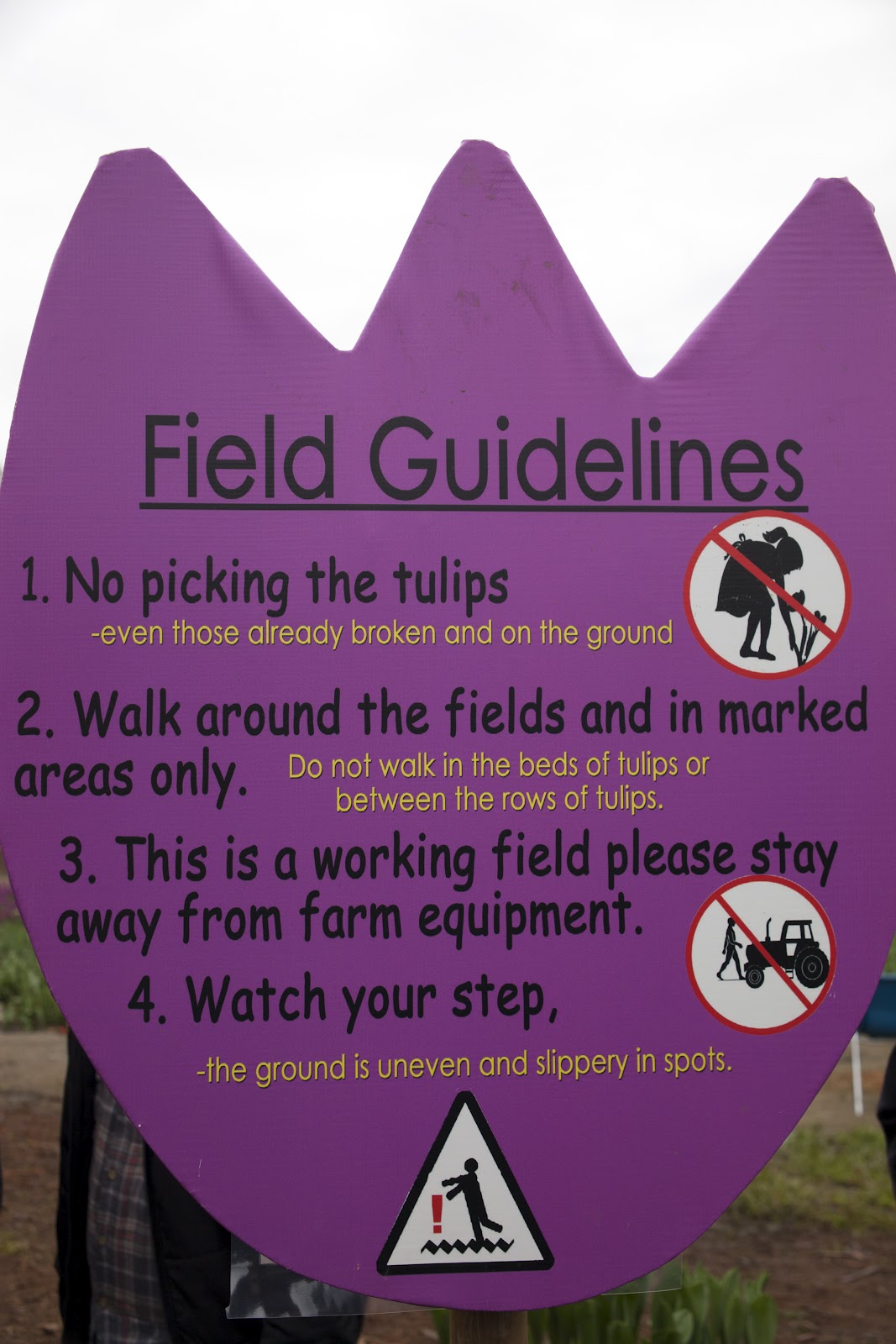
The Fraser Valley is known for its fresh local agricultural products and famers markets but in spring, the fields in the valley are lined with locally grown tulips. The fields in the valley are not as common and extensive as the ones in the Netherlands, however, the snow-capped mountains add a dramatic background.


One of the farms near Agassiz hosts a Tulip Festival each year and visitors can walk around their rainbow-colored field after paying an entrance fee of $3.00. Not being able to bike through the Dutch tulips fields this year, the tulip festival was a nice alternative and I got my tulip fix for another year :-).


Here are some facts from the B.C. Ministry of Agriculture relating to the flower industry:

B.C. is the largest producer of cut tulips and bulbs in Canada and within the province the tulip industry is a major player. Tulip market sales account for more than one-quarter of B.C.’s entire cut flower industry. In 2009, B.C. tulip growers hand-harvested approximately 21 million tulip stems. That same year, the entire cut flower industry contributed nearly $41 million to B.C.’s economy. 

·         Tulips are the main cut flower grown in B.C., with over 21 million stems produced in 2009.
·         In 2009, the cut flower industry contributed nearly $41 million to B.C.’s economy.
·         B.C.’s cut flower industry grows a diverse range of field and greenhouse-grown annuals, perennials, bulbs, ornamental grasses and woody cut flower crops.
·         Gerbera daisies are now the second major cut flower crop grown in B.C.
·         Other popular cut flowers grown in B.C. include alstomerias, spray chrysanthemums, daffodils, freesia, irises, standard roses and snapdragons.


Tuesday, 27 March 2012

Stanley Park

During a recent photowalk with the Vancouver Photowalks Meetup Group, we discovered the beauty of Stanley Park.

Stanley Park, Vancouver's magnificent urban park, opened in 1888 by governor Lord Stanley, is great for hiking, biking, walking or running along the 8.8km seawall that loops around the park or along the numerous forested trails through the temperate rain forest. The seawall is divided into two sections, one lane is for cyclist and inline skaters and the other one is for walkers and joggers. On sunny days, it can get quite crowded along the seawall.

The park also has a couple of excellent beaches, ideal spots to take in the fantastic scenery and amazing sunset while enjoying a picnic.

Another great place for spectacular views is the Prospect Point overlooking the 'Lions Gate' Bridge, a suspension bridge that crosses the first narrows of the Burrard Inlet and connects downtown Vancouver with the North shore. Officially, the bridge is called the 'First Narrows' Bridge and the term 'Lions Gate' refers to two mountain peaks known as 'The Lions' north of Vancouver.


Despite being Vancouver's main tourist attraction, it's a great place to relax and to spot the occasional wildlife such as blue herons, raccoons, seals, eagles, geese, squirrels and coyotes. Beaver Lake is a great place to spot waterfowl, beavers at work and the occasional turtle. In the summer, the surface of the lake is covered with waterlilies.


There are also plenty of attractions for families and visitors in the park such as the Vancouver Aquarium, the horse-drawn carriage, the miniature train, the Second Beach Pool as well as several restaurants.


Wednesday, 1 February 2012

A weekend in the Yukon

Yukon is one of Canada's federal territories and lies North of British Columbia. Yukon's tourism motto is "Larger than life", which is so very true. The distances are endless and the natur is just breathtaking. Most of the 30'000 inhabitans life in or near Whitehorse, I was amazed at the number of foreigners (Swiss, German, Polish, British, Indian, Japanese, etc) that live there and we were told that the reason for moving there is the lifestyle and the outdoors. 


Whitehorse also hosts many cultural and sport events take place such as the Arctic Games and the famous Yukon Quest (http://yukonquest.com), a 1600km dog sled race. Most people move there for the lifestyle. The Arctic Games include sports such as the one and two-foot high kick, the Alaskan high kick, Airplane and sledge jump: http://www.awg2012.org/en/Home.aspx


On Saturday, we drove along the Alaska Highway to Haines Junction, the gateway to Kluane National Park. Although we were tempted for a walk somewhere, we were very quickly deterred by the freezing cold temperatures, it was -35oC! It was like being  in a giant freezer only it was much colder than that. However, we did enjoy the spectacular scenery and occasional wildlife from the warm interior of the car. 


You can drive for hours and are more likely to see a moose or a wild horse than another car or human being. Signs like this one remind you that you are out in the wilderness and that help isn't just around the corner. Forget about your cell phone too, there is no signal out there.


The highlight of the trip was a day of dogsledding through the wilderness. The temperature, in the meantime, had risen to -22oC, still very cold but we were outfitted with warm jackets, pants, gloves and hats, which we wore over several layers of clothing. 


Remco and I had a team of 6 dogs that were all eager to take us for a run. We took turns driving the sled and enjoying the scenery. 


One had to be careful to stay on the break whenever we stopped as Remco's colleague found out the hard way. Their dogs took off with the empty sled and sped away only to be stopped by the tour guide who was following us on his snowmobile. We stopped somewhere for lunch and our guide grilled some hot dogs (the sled dogs are still alive) on the barbecue. My biggest concern was how to go to the toilet in the freezing cold while wearing 5 layers of clothing on top of each other. I somehow managed without having any body parts frozen off. 


Once we got back to the ranch, we warmed up with some hot chocolate and brownies and had a chat with the owner, who has been doing dog sledding for 40 years. He participated 24 times in the Yukon Quest and won the race 12 times. It was very interesting listening to him how they would prepare and how they took care of the dogs before and during the race. The wellbeing of the dogs is their top priority and teamwork is the key to success. 


We'll definitely go back to Yukon for a longer trip to explore the wilderness up to the Arctic Circle and Alaska.


Thursday, 26 January 2012

Cypress Mountain

Today was one of these days where after a long 4 days of rain and grey skies (I should be used to this kind of weather from living in Amsterdam for 10 years) I was able to enjoy a  perfect ski day. Having the mountains just on our doorstep I am very grateful to be in this wonderful city.


Based on recommendations I had bought a seasons pass for Cypress Mountain, one of the three mountains in West Vancouver, before I even moved here. Since we don't have a car yet, I take the ski bus from downtown Vancouver to the mountain.The first time took public transport to get to the ski bus stop I felt a bit awkward with all my ski gear but it's a normal thing to do in Vancouver. It is not uncommon to see people walking around town with their ski gear or snowboards coming from or getting to the slopes.

Although the snow has been disappointing in the first 3 weeks of January, it was mainly man-made snow with lots of ice, I did enjoy going up there to enjoy the amazing view of Greater Vancouver, Vancouver Island as well as Mt. Baker and on a very clear day Mt. Rainier in Washington state. Now, that there is real snow, I will enjoy as many days as I can.


The other amazing thing about Cypress is that you can watch the sun set over the Pacific Ocean while skiing as the lifts run until 10pm every night. Actually, the mountain doesn't get busy until about 4pm when the kids and working folks come up for a few runs.

Friday, 23 December 2011

Moving Day Part 2

Our container had left Rotterdam on the Maersk Pembroek vessel in the direction of Montreal on November 21. We were able to track the vessel on a marine website and saw that it arrived in Montreal on December 5th. From Montreal, it was loaded on a train and arrived in Vancouver a few days later, just 3 weeks after it left the Netherlands. That was the easy part.

The shipping agent here in Vancouver contacted us early on a Monday morning telling us that our container had arrived and that they had to deliver it by Wednesday without paying any additional storage costs either at the rail road or at their warehouse. We also had to make an appointment with Canada customs immediately and get in touch with the BC liquor control board to get an import license for our wine. Getting the appointment with Canada customs was no problem, however, the earliest we could go there was on Wednesday morning which meant that we had to get the container stored somewhere. Getting a liquor license was a different story, the shipping agent couldn't give me a phone number to call so after surfing the internet I called to an office where they couldn't help me but advised me to contact the liquor distribution branch. If you Google the liquor control board and the liquor distribution branch, you end up on the same website, and I really don't know what the difference is. Anyway, after being connected to 5 different departments, I finally spoke to someone who was able to assist me. She got the import license sorted out and we were good to go to Canada customs on Wednesday morning.
After paying CAD$320 to import our 60 bottles of wine (that was a small price to pay given the prices for wine and liquor in this country), the customs officer cleared out container without inspecting it.

The delivery of the container was scheduled for Monday, December 19th and just before 8am, the truck driver called me to let me know he was parked somewhere outside.


With our help, he backed up the container into the loading bay and left the container there. The crew was supposed to arrive between 8.30 and 9.30am, however, no crew showed up. When we called the shipping agent, they told us that the container had arrived (as if we hadn't noticed it...) and that the crew should be there shortly. Finally, 2 guys showed up an hour later and started to unload. Of course, it took way longer than expected and the concierge charged us extra for having the elevator blocked an additional 2 hours. The guys brought all of our 177 boxes into our apartment and unwrapped the furniture, however, left us with unpacking most of the stuff ourselves.
As great as the service was in the Netherlands, the service we got from the Canadian counterparts definitely did not meet our expectations. In the end, we were happy to have our belongings before the holidays and thanks to our first visitor Yvonne, who helped me unpack and clean, our house started to look like a home again.